Henry Burn Latter was born in Halifax, Nova Scotia in 1896, the son of Henry and Laura Latter living on Henry Street. He was unmarried and working as a machinist when he enlisted on 8 November 1915. arrived in England 31 January 1916. Henry had originally joined the 66th Regiment, The Princess Louise Fusiliers (see photo). The Fusiliers formed the 66th Battalion, CEF and provided reinforcements to the Canadian Corps in the field. Henry embarked for France on 9 March and was taken on strength of the 2nd Pioneer Battalion on 31 March 1916.
The 2nd Pioneer Battalion had been recruited in Eastern Canada among miners, lumbermen, railwaymen, mechanics, engineers, surveyors and carpenters. They left Halifax 6 December 1915 aboard the ship Orduna and arrived in England on 14 December 1915. They received reinforcements from reserve battalions station in England and after a three-month period of training, arrived in France on 8 March 1916 assigned to the 2nd Division. Henry would have joined the battalion as a reinforcement and seen action in every engagement they fought.
Pioneers worked in conjunction with the Engineers in the Forward Area. Pioneer battalions were allocated one per division and had an established strength of over 1000 officers and men. They were not trained as engineers and served as sources of semiskilled labour, often supervised by higher-skilled engineers, but not under engineer command. Their work included tasks consolidating positions captured by the infantry, tunnelling, mining, wiring, railroad work, deep dugout work and laying out, building and keeping trenches in good repair. In 1918, pioneer battalions were broken up with most of the personnel being sent to the newly formed engineer battalions. (1)
Henry was appointed Lance Corporal on 21 February 1918. On 22 July, he was diagnosed with a hernia at Number 4 Field Ambulance. He travelled through Numbers 6 and 14 Field Ambulance until returning to Number 4 on 26 July before finally being sent to hospital. He was released back to the 6th Battalion, CE on 2 August, fit for duty.
He was wounded on 29 September and evacuated to 1 Casualty Clearing Station. He later died of wounds at 10 Field Ambulance on 16 October 1918.
His name is inscribed on the Vimy Memorial. Over 11,000 fallen Canadians having no known place of burial in France, are honoured on this Memorial.
Notes:
- As a means to address increasing manpower shortages in early 1918, the British reorganized their divisions by disbanding the fourth battalion in each brigade and using any surplus to strengthen their remaining three battalions. General Currie took a different approach. He retained the four battalion brigades and used his reinforcements to augment depleted infantry battalions by 100 men. He then created a machine-gun battalion in each division, and expanded each engineer field company (216 strong) to an engineer battalion in each brigade. The help bring the engineer battalions up to strength, each division's pioneer battalion (more than 1000 strong) was integrated into one of the field companies to form an engineer battalion in each brigade, under an engineer brigade at each division.
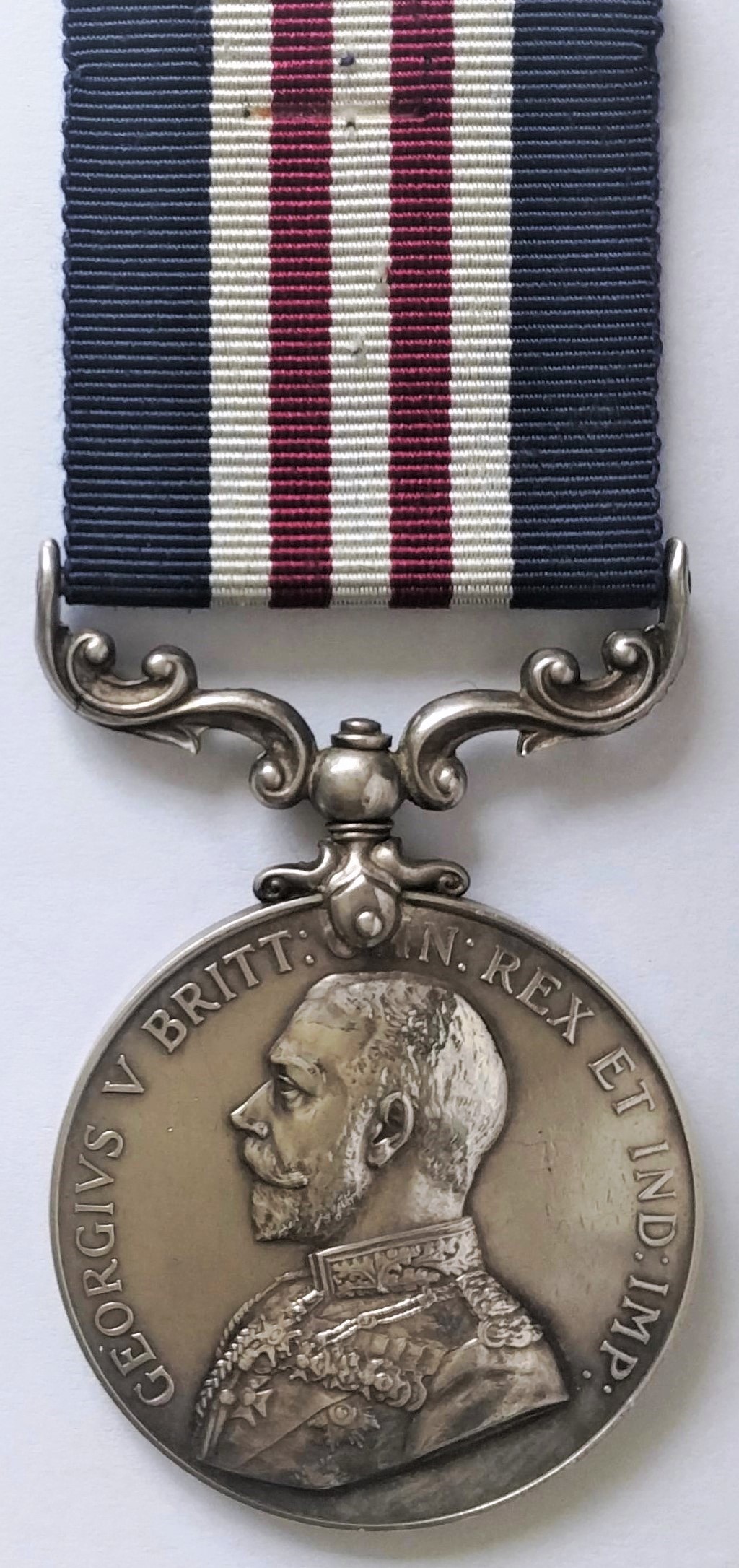
No citation was written for L/Cpl Latter's Military Medal. The award was given for actions on 7 October 1918 and was announced in the London Gazette # 31338 on 14 May 1919.