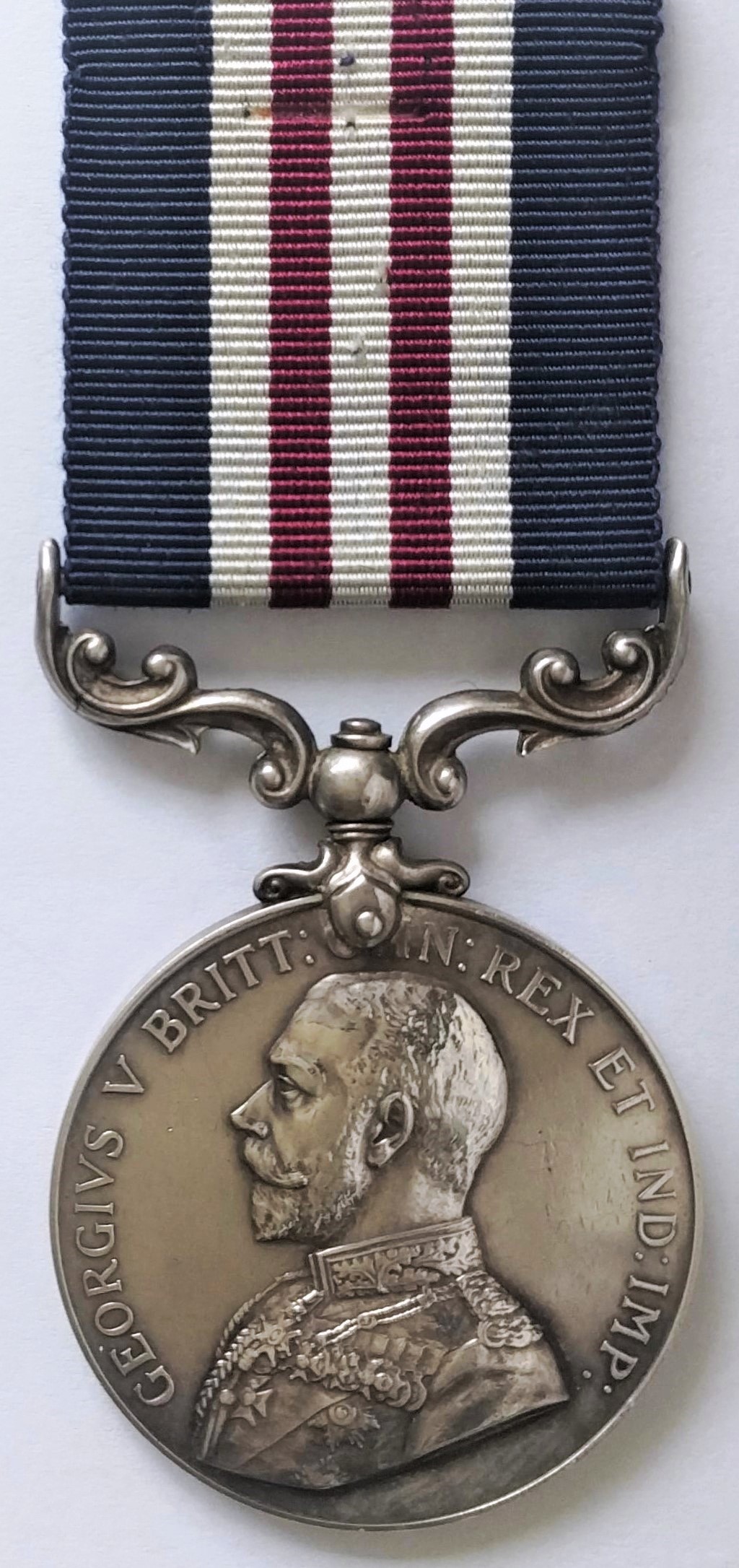
Frank Leonard Osborn Breeze was born in Witten, Birmingham, England in 1893. He had served in the Royal Warwickshire Regiment as a reservist for four years before coming to Canada He enlisted in the 67th Battalion (Western Scots) (1) in Victoria, BC on 1 September 1915 He was married to Florence Breeze who was still living in Witten at the time. He declared his trade as painter.
The 67th Battalion left Canada on 1 April 1916. Shortly after arrival in England, it was converted to a pioneer battalion on 15 May 1916 and re-named the 67th Canadian (Pioneer) Battalion, CE. Frank was appointed Lance-Corporal a few months later on 5 November 1916. The battalion disembarked in France on 14 August 1916, where it served as part of the 4th Canadian Division in France and Flanders. Pioneers worked in conjunction with the Engineers in the Forward Area. Pioneer battalions were allocated one per division and had an established strength of over 1000 officers and men. They were not trained as engineers and served as sources of semiskilled labour, often supervised by higher-skilled engineers, but not under engineer command. Their work included tasks consolidating positions captured by the infantry, tunnelling, mining, wiring, railroad work, deep dugout work and laying out, building and keeping trenches in good repair. In 1918, pioneer battalions were broken up with most of the personnel being sent to the newly formed engineer battalions. (2)
The city of Valenciennes had been captured by the Germans in August 1914 and remained in their hands for the entire war. By late October 1918, as the Hundreds Days offensive was nearing its end, the Allies had broken the Hindenberg Line and the fighting had changed from near-static trench warfare to one of manoeuvre. Supporting the 1st British Army’s advance, the Canadian Corps was assigned the task of guarding their left flank. The general plan was to swing north to surround the city, defeat the garrison and then re-join the advance. Unfortunately, the German garrison remained in place and the areas to the north and west were flooded. General Currie, remembering Hill 70, saw that Mony Houy, south of the city on the British line of advance, provided dominating ground from which to Germans could stop or delay further movement.
The British attacked on 28 October and only gained the lower slopes. They pulled back and turned away from the area to maintain the thrust ahead. Currie was given the additional task of taking the heights as well as the original objective of taking the city. The Canadians moved into position and opened their barrage on 1 November and the 3rd and 4th Divisions began to move up the slopes. Despite using gas to push the Canadians back, the defenders were defeated before noon that day. The advance into the city followed up with engineers working hard to establish crossings into the city to secure the many shallow bridgeheads captured by the infantry.
On 1 November, Sgt Alexander Pratt and L/Cpl Breeze were attached to the 72nd Battalion, CEF (Seaforth Highlanders of Canada) to deal with booby traps and like devices. During their advance, they found a bridge over one of the waterways prepared for demolition and blocking the patrol. They crawled ahead under enemy MG fire and cut the cables leading to the charges. The Highlanders dashed ahead and captured the two German sappers desperately trying to set off their charges. Both sappers were awarded the Military Medal for their actions.
Frank was discharged in the British Isles on 6 June 1919. Aside from some visits to Canada, he stayed in Witten and died there in 1962.
Notes:
- The 67th Battalion (Western Scots), CEF is perpetuated by The Canadian Scottish Regiment (Princess Mary's). The battalion was officially disbanded on 30 August 1920.
- As a means to address increasing manpower shortages in early 1918, the British reorganized their divisions by disbanding the fourth battalion in each brigade and using any surplus to strengthen their remaining three battalions. General Currie took a different approach. He retained the four battalion brigades and used his reinforcements to augment depleted infantry battalions by 100 men. He then created a machine-gun battalion in each division, and expanded each engineer field company (216 strong) to an engineer battalion in each brigade. The help bring the engineer battalions up to strength, each division's pioneer battalion (more than 1000 strong) was integrated into one of the field companies to form an engineer battalion in each brigade, under an engineer brigade at each division.
There is no citation for L/Cpl Breeze's award. The award was published in the London Gazette # 31430 dated 3 July 1919.
<p><em><strong><a href="https://cmea-agmc.ca/node/14068">Return to the list of First World War Military Medals</a></strong></em></p>