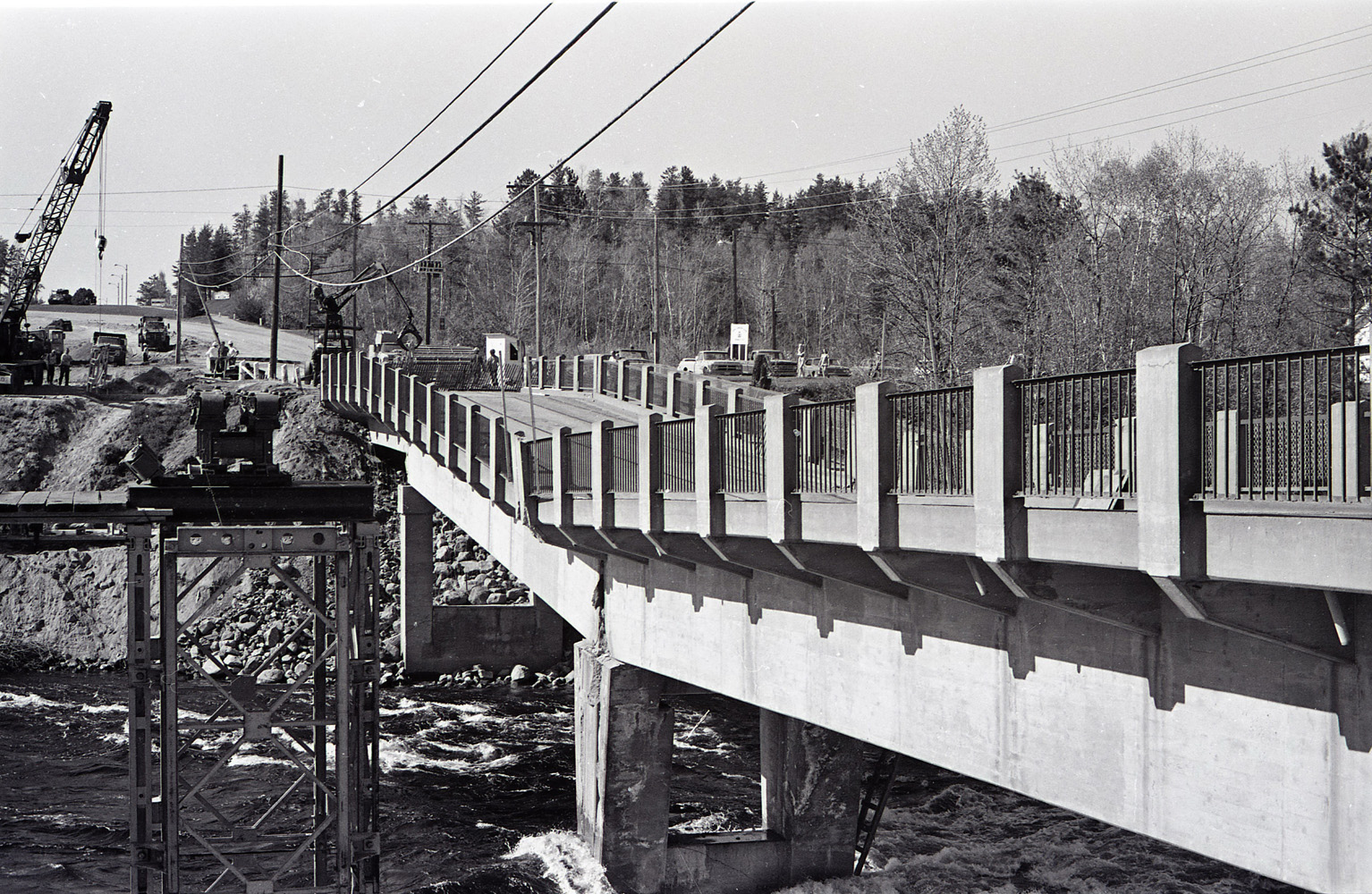
On 7 May 1972, a major bridge failure cut the Trans-Canada Highway in Ontario at the Petawawa River. The foundation of the centre pier of the Highway 17 bridge had eroded, causing the bridge to sag more than a metre. Within hours, parts of Canadian Forces Base Petawawa and the surrounding communities were effectively isolated.
The failure was more than a transportation inconvenience; it disrupted emergency services, commercial traffic, school transportation, and food deliveries. About 700 people were stranded overnight at CFB Petawawa, and the movement of more than 4,000 residents on the Chalk River side of the bridge was immediately affected.
The emergency response quickly became a military engineering operation. 1 Field Squadron, Royal Canadian Engineers, was called upon to help restore the transportation link. They immediately began the reconnaissance to restore movement across the river by whatever means were available. At the river, engineers quickly established an Assault Boat shuttle to move people between the two banks. They established a 60-kilometre detour through the CFB Petawawa training area. The squadron then constructed a Military Load Class (MLC) 30 Light Floating Raft capable of carrying essential supplies, perishable food, ambulances, and other critical traffic.
A raft was only an immediate solution. The squadron engineers then constructed a 312-foot MLC 30 Light Floating Bridge. Because the river’s swift current posed a major challenge, the team built a heavy static-line anchorage supported on two towers to keep the bridge from moving excessively. The team completed the floating bridge in about twelve hours.
While the Light Floating Bridge had restored an essential road connection, it was only an interim measure. A more substantial temporary crossing was required while plans for a permanent bridge were developed. Working with the Ministry of Transportation and Communications, 1 Field Squadron then assisted in constructing two piers beside the damaged bridge. The Squadron then undertook the specialized work of installing the two Standard Wide Bailey Bridges. Engineers prepared the roller layouts, assembled and launched the bridges, and then jacked them down onto their baseplates.
The first Bailey Bridge opened to traffic on 30 May. The second followed on 1 June - less than four weeks after the emergency began. These bridges restored a dependable connection across the river. The two bridges remained in service for approximately two years while a permanent replacement bridge was constructed.
The Petawawa bridge emergency demonstrated the value of having trained military engineers and specialized bridging equipment available when civil infrastructure fails. Within hours, 1 Field Squadron had moved from reconnaissance to immediate river crossings, route construction, and then operating floating bridging equipment. The demanding operation required engineering skill, improvisation, and close cooperation between military and civilian organizations. The rapid response of 1 Field Squadron ensured that an isolated military community and thousands of civilians regained access to essential services. When a bridge is down, the determined engineers will find a way across the obstacle!