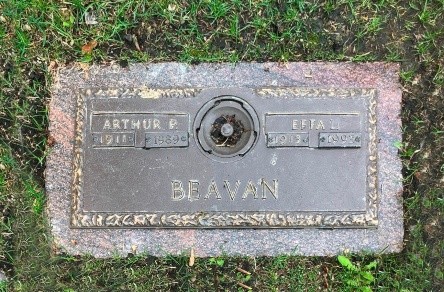
Arthur Paul Beavan* was born in Victoria, BC in 1911. His father, a British immigrant, served 12 years in the Canadian Militia before enlisting as a private in the 1st Canadian Pioneer Battalion in January 1916. He was later commissioned as a Lieutenant and served with the 2nd Canadian Pioneer Battalion in France. In 1917, he received a severe concussion from an exploding shell and was returned home to Canada that year.
The family was living in Courtenay, BC, when Arthur started studies in geology at the University of British Columbia in 1928. He then moved east and continued studies at Queen's University in Kingston, ON. He graduated in 1932 with a degree in Applied Science. He returned to BC for a short time to work in the Kootenays, and then went on to Princeton to earn a doctorate in 1939.
For several years, he was the geological editor of the Canadian Institute of Mining and Metallurgy magazine. He worked across the country in several mining and exploration activities. He was a member of the Association of Professional Engineers of Ontario. He joined the Royal Canadian Engineers during the Second World War.
The role played by the 9th Field Squadron during the Kapelsche Veer battle is told in the article Engineer Gallantry at Kapelsche Veer.
Dr Arthur Paul Beavan, PhD, MC died in Fernie, British Columbia on 04 May 1989. He is buried in Eden Brook Memorial Gardens in Calgary.
*While the citation spells his name Beaven, the correct spelling is Beavan.
By far the most important of these reconnaissances was to find a route over a demolished bridge at 147489, thence along the north bank of the Oude Maasje to the area 097498. To complete this mission Lieutenant Beaven went alone through intense mortar and semi-automatic fire, lying up often whilst enemy patrols scoured the area in search of him, and returned with detailed and accurate information. During the operation on 29 January 1945, at abut 1500 hours, it was essential to reconnoitre a route around a bogged-town tank at 10249, 6.
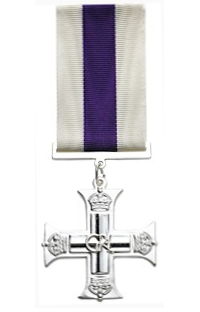 Previous to Operation ELEPHANT which was to capture Kappelsche Veer area, Holland, Sheets 10 NW and SW, it was vial to success that certain Engineer reconnaissances be carried out to determine routes into the garrison. The majority of these reconnaissances were carefully and efficiently carried out by Lieutenant Beaven between 1, 6 January and 25 January 1945.
Although the tank was in enemy territory with our own infantry 300 yards in rear, Lieutenant Beaven worked his way forward in the face of heavy machine gun fire and reconnoitred and marked an alternate route around the tank. This courageous effort enabled one of our tanks to get right into the garrison area and create considerable havoc amongst the enemy. Throughout the operation Lieutenant Beaven showed a complete disregard for his own safety, and his coolness and initiative under dangerous circumstances undoubtedly played an important part in the success achieved.