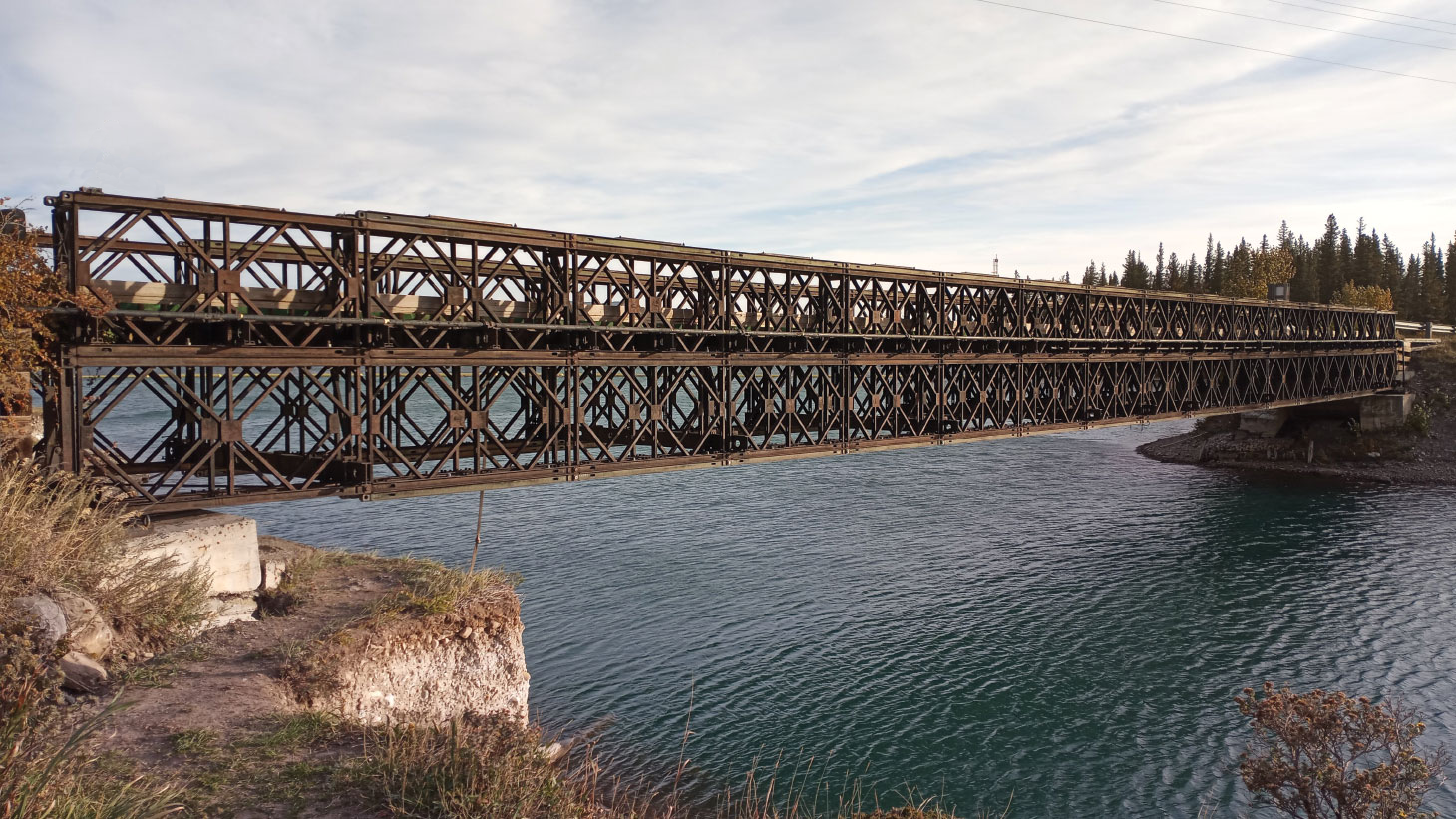
This bridge is at Exshaw, AB over the Kananaskis River providing access to Lafarge Exshaw Cement Plant and can be viewed from the Trans-Canada Highway between Calgary and Banff.
In October 1950, the Canada Cement plant at Exshaw Alberta faced a problem. A steel truss bridge across the mouth of the Kananaskis River had collapsed restricting access to a slate pit located across the river from the plant. It was critical to replace the bridge for the safety of workers in the pit.
The General Manager of Canada Cement, a wartime Royal Canadian Engineer field company commander, had maintained contact with his former comrades and sought their help to erect a Bailey bridge on the site. Calling on their wartime experience, they prepared the plans and specifications for the bank seats. Canada Cement constructed them in preparation for the Bailey. Arrangements were made to deliver the necessary parts to the shale pit siding in November.
13th Field Company, RCE, a Militia unit based in Calgary, under command of Captain Jack Yates, trucked the bridge parts to the site and provided a skeleton crew of trained sappers who supervised the work parties composed of largely untrained company employees and other Militia members. The project is a perfect example of the simplicity of the Bailey bridge design and the abilities of trained and experienced military engineers to assemble a functional crossing with untrained people.
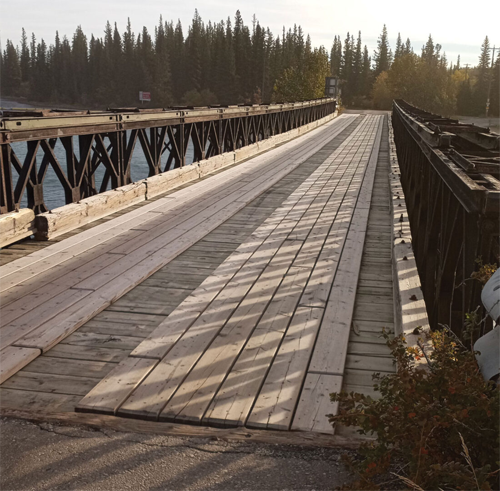
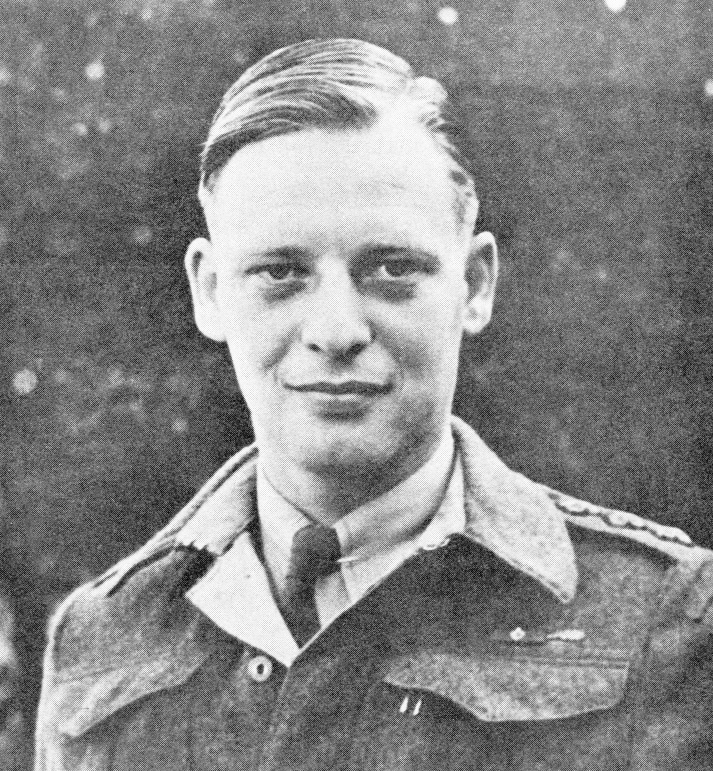
The engineer in charge of the build was Captain Edwin “Bud” Peto (Ret’d). Bud had designed the bridge with the ramps built level to the road surface to reduce the thrust heavy fast-moving vehicles would exert on the bridge. The site was prepared before the Calgary sappers arrived on a Sunday. The crews worked through the night, using vehicle headlights. When the morning came, a 160-foot double triple Bailey bridge was in place and the crossing opened. The add to its longevity and to reduce maintenance, Bud later had the transoms tack welded to the panels and removed the transom clamps. At the time it was built, it was the longest private Bailey bridge in Canada.
The bridge also represents another important example of the basic versatility of the Bailey bridge. Over the year, the trucks hauling material from the pit, got bigger and wider. As they were becoming too wide to fit between the girders, someone developed a plan that saw the bridge deck raised five feet, one bay at a time, from the bottom chord of the lower panels to the bottom chord of the upper panels. Bud’s original welding idea must have caused some issues, but the raised deck now allows wider vehicles with big wheels to cross even though their cargo boxes hang out over the girders.