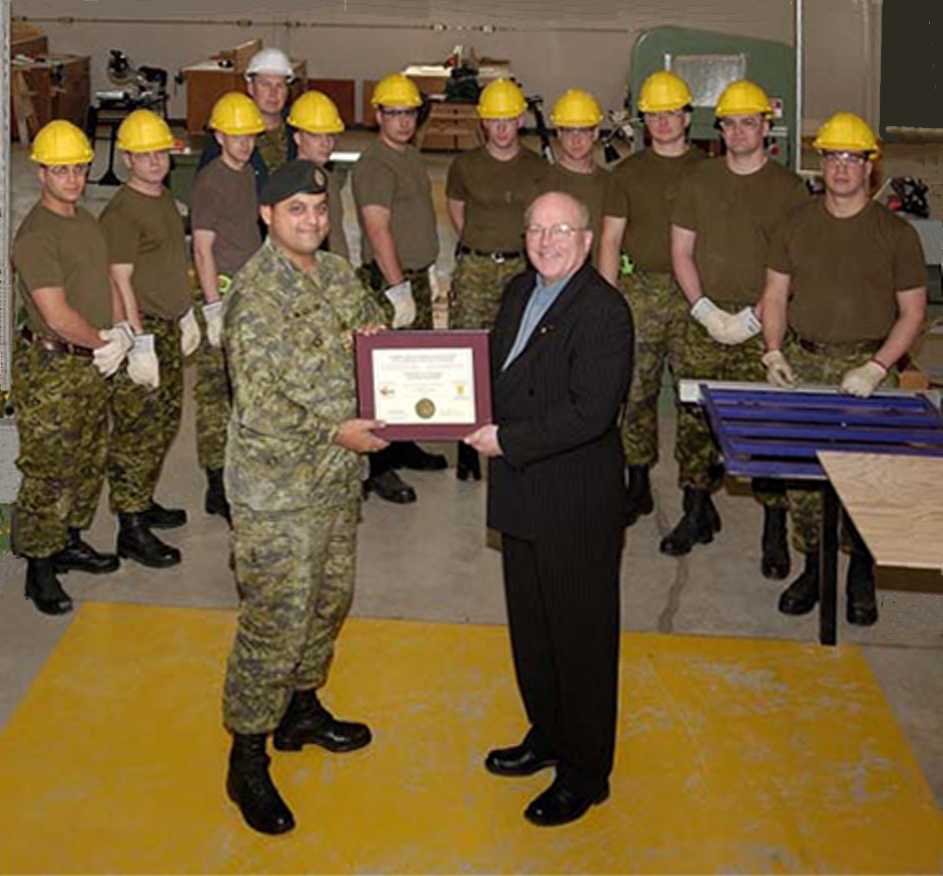
In 2004, the Canadian Forces School of Military Engineering (CFSME) reached a milestone in the long evolution of professionalism in the construction engineering trades. For many decades, CFSME has produced soldiers capable of building, repairing, and sustaining the infrastructure that Accreditation supports operations at home and abroad. Yet civilian recognition of this training remained uneven.
On 6 December 2004, CFSME received national accreditation from the Ca s: Refrigeration and Mechanical Systems Technician, Electrical Distribution Technician, Electrical Generation Systems Technician, Plumbing and Heating Technician, Water, Fuels and Environment Technician, Construction Technician, and Construction Superintendent. Their recognition marked a significant professional milestone.
The CCTT maintains national competency standards to ensure excellence in applied engineering fields. Its accreditation process is stringent. They reviewed our standards, curriculum, and documents, and conducted interviews and site visits to ensure that our training met the national CCTT competency standards. That CFSME met these standards affirmed what generations of Sappers already knew: the school’s technical training was equal in depth and rigour to civilian programs.
The accreditation initiative stemmed from a report by the Standing Committee on National Defence and Veterans Affairs (SCONDVA) that emphasized the need to improve the portability of military qualifications. The Canadian Forces implemented the recommendations through the Accreditation–Certification–Equivalency (CAF ACE) program, mapping military training to provincial apprenticeship systems and Red Seal standards. The 2004 CCTT accreditation stands as an early and influential step in a larger movement toward formal recognition of military technical expertise.
This accreditation opened a new pathway for CME members. Graduates who completed their military training and accumulated two years of work experience could now apply for the Certified Technician (C.Tech.) designation. As Mr. Edward F. Leslie, the Executive Director of the New Brunswick Society of Certified Engineering Technicians and Technologists, explained during the ceremony, “a Technician designation proves that you know what you are doing. It removes questions for possible future employers.” For serving members, this recognition strengthened professional identity. For those transitioning to civilian life, it provided a tangible credential that eased entry into the construction and engineering workforce.
At the ceremony in the Mitchell Building, the Commandant, LCol Gupta, captured the significance of the moment, stating that the accreditation recognized a shared mission between CFSME, the CME Branch, and CCTT: “to provide excellence in engineering training.” The 2004 accreditation remains a landmark achievement - one that affirmed the professionalism of the Construction Engineers and strengthened the bridge between military service and civilian opportunity.