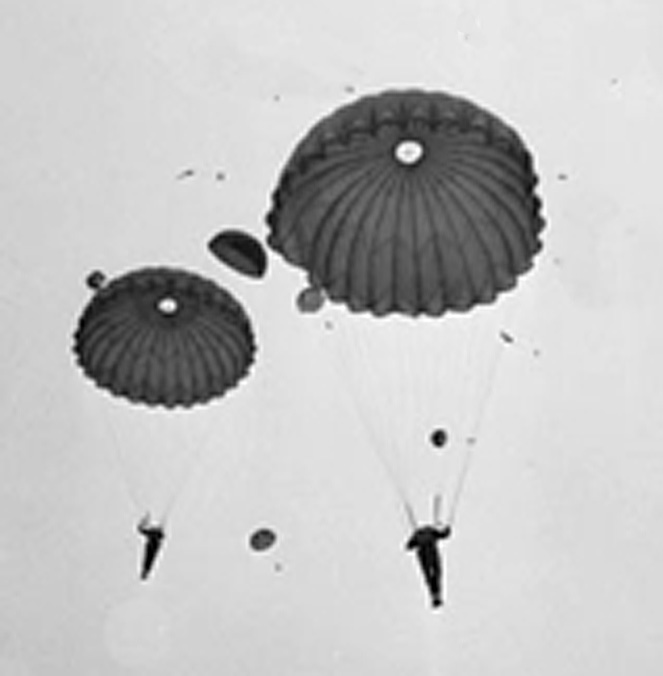
In the darkening evening of 8 May 1968, what was planned to be a routine airborne training exercise at Canadian Forces Base Petawawa turned into a tragic and harrowing ordeal. Twenty-six paratroopers from the Airborne Signal Troop and a parachute section of 1st Battalion, Royal Canadian Regiment prepared to descend from three newly introduced Buffalo aircraft over the Mattawa Plains drop zone. However, unforeseen wind shear pushed twenty-two of them far off course, resulting in most of them landing in the icy Ottawa River near Wegner Point. Members of 1 Field Squadron played a crucial role in the emergency rescue and recovery operations that unfolded that night.
As the paratroopers struggled in the frigid water, entangled in their parachutes and weighed down by gear, the severity of the situation quickly escalated. 1 Field Squadron was immediately mobilized to aid in the search and rescue effort. Two rescue boats had been prepositioned: one was in the small Bostwick Lake west of the drop zone, and the other was in the river. Practised in such emergency operations, their skills proved invaluable as the river’s swift currents and darkness complicated attempts to locate and save the soldiers.
The squadron worked alongside other military personnel, local emergency services, and volunteers to establish a coordinated response. This integrated effort involved over 300 personnel from multiple units, including the Base Military Police and the Fire Department. The squadron organized the rescue boats and helped set up communication systems. Combat divers and boats were deployed over the banks of the Ottawa River and across the rough waters, thereby enabling quick access to the targeted sections of the river.
The members of 1 Field Squadron faced freezing water temperatures and hazardous river conditions as they searched tirelessly through the night. Their efforts helped recover all but seven of the paratroopers, who tragically drowned before rescuers could reach them. The squadron’s role extended beyond immediate rescue operations as it also helped recover bodies from the river.
This tragic event marked the worst parachute accident in Canadian Armed Forces history, but the professionalism and bravery shown by 1 Field Squadron helped prevent an even greater loss of life. Their quick response and ability to operate under pressure enabled them to save their fellow soldiers. The subsequent analysis of the operation prompted improvements in military parachuting safety protocols, emergency preparedness, and rescue coordination.
Every year, a commemorative service is held at Wegner Point to honour the seven airborne soldiers who perished and remember the courageous efforts of all who took part in the rescue, including the members of 1 Field Squadron (now 2 Combat Engineer Regiment). Their essential role in this recovery operation reminds of the risks military personnel face even during peacetime training.