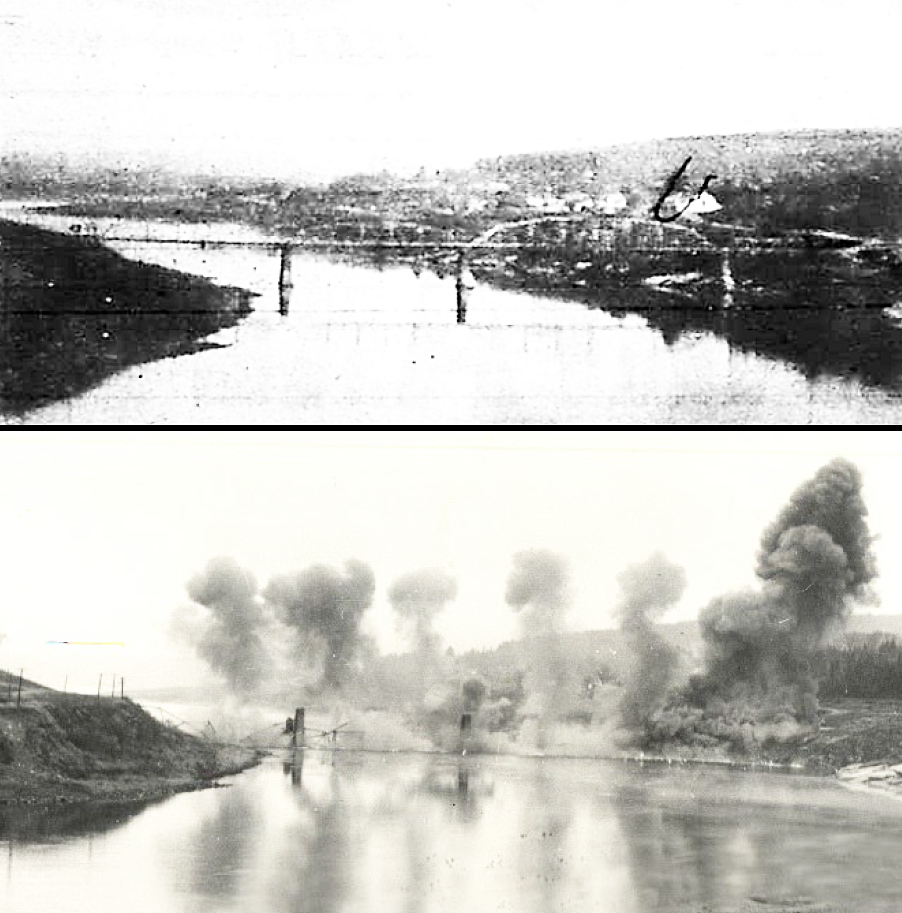
In the Fall of 1967, 2 Field Squadron from Camp Gagetown, New Brunswick, had the opportunity of a lifetime - the demolition of a 245-metre, four-span steel bridge. The Mactaquac Dam project required significant flooding of the Saint John River valley. The Hawkshaw Bridge, located at Pokiak Falls on the Saint John River (midway between Fredericton and Woodstock), would soon be under 25 metres of water in the head pond of the new Mactaquac Dam.
Removal of much existing infrastructure, including this bridge, was necessary. The provincial government determined that dismantling and salvaging the bridge would not be economical. Accordingly, the province decided to demolish it.
The 3rd Canadian Infantry Brigade was tasked with destroying the bridge, and 2 Field Squadron was assigned to demolish it. The project was framed within a tactical exercise using a ‘Reserved Demolition’ scenario, with an infantry platoon of The Black Watch of Canada defending the bridge until a withdrawing force had crossed it. Major Sam Dunbar, the 2 Field Squadron Commanding Officer, was in overall charge of the project, while Captain John Wilson oversaw the demolition.
In addition to the bridge structure itself, there were three granite masonry piers and two concrete abutments. The squadron began planning for the demolition and conducted refresher training on demolishing a large steel bridge.
On 2 November, a team of about 200 sappers began placing the explosives on each of the four bridge spans. Some 20 sappers were responsible for placing about 25 charges on each span, and a party of ten conducted the actual firing.
On 3 November, with the Black Watch platoon defending the bridge from their slit trenches, the scene resembled a battlefield as the countdown to the blast began. Defence Minister Leo Cadieux observed the exercise.
The Hawkshaw Bridge went down in a blaze of glory as 450 kilograms of explosives were detonated at 3:17 p.m. A sharp blast echoed across the valley, followed by the deep groan of the steel giving way. In an instant, the old bridge buckled, folded, and dropped into the St. John River. A cloud of dust and spray rose as the spans disappeared beneath the surface. The crowd reacted with a mix of awe and solemnity - the spectacle was dramatic, but it also marked the end of a piece of local history.
In the days ahead, crews returned to clear some of the debris from the river. Meanwhile, just upstream, a new $ 2-million replacement bridge was nearing completion. As the remains of the old bridge reminded everyone of the past it replaced, the construction of a new bridge symbolized the region’s modernization. Sappers had assisted with this move forward.