
IE FOCUS - 22 December 2014
The word “transformation” has been tossed about for a while now in relation to real property management at National Defence. It is the right word to use. Transformation means fundamental, dramatic change and that is exactly the kind of change we are making to real property management. Organizations that transform look completely different when they are done – and we will too.
In fact, we are already through some of the biggest changes. We have restructured the IE Group and are well advanced on our path to centralizing real property management. We are now the single real property portfolio manager and have started to undertake strategic asset management analyses and make progress in the allocation of divestiture and maintenance & repair funding. We have already transitioned from nine to four custodians and on 1 Apr 2015, the RCN portfolio and all real property in the Pacific region will be transferred to ADM(IE), with the balance of the portfolio being transferred in just 16 months. As part of this, a shared approach for the management of environmental obligations and risks associated with force generator activities and with real property is being developed. As well, Phase II of our work to replace some 28 information systems begins in February.
We have made significant progress, but the kind of change that we are in the middle of is never easy. Every organization that transforms inevitably goes through a low period or “valley” – in other words, things get worse before they get better. And we are in that valley now – that period where: the change seems that it is not working very well; roles and responsibilities need to be clarified; morale and confidence is low; and why we are doing all of this is unclear. Going through this “valley” is normal, but that doesn’t make it easier.
So perhaps now is a good time to remind ourselves of a few things. First, what we are doing is important. We are responsible for managing some $25 billion in assets. How we manage those assets has a direct impact on the health and safety of Canada’s armed forces and their readiness to defend Canada. Files don’t get any more important than that. And the budget is a huge responsibility - about 5 times the size of your average government department – about five times the funding of Aboriginal Affairs or five times the dollars that government provides to support Canadian researchers. It is a file so big that how we manage it can substantially affect the Government of Canada’s projections for surplus or deficit.
Second, we are going through all of this change because we are trying to make a big, necessary difference to a big file. In 2012, the Auditor General said that National Defence will have to transform the way it manages real property to fulfill all of the requirements of sound stewardship. We are centralizing the management of real property and replacing all our information systems because in the past, nine different groups independently managed real property – that is no way to keep the costs down and make sure that the Canada’s Armed Forces will have the right assets in the right condition. To get through the valley, now is also a good time to refocus our transformation agenda. To that end, a Transformation Office has been established under the leadership of Peter Oberle. Tag Shattuck is the Transformation Director.
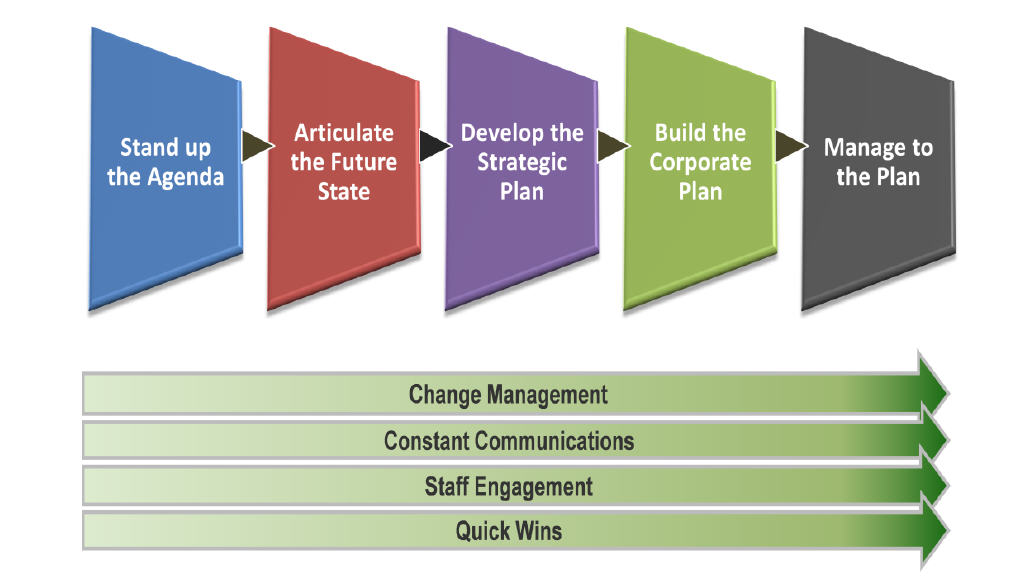
Now that it is set up, the Transformation Office is working on three priorities: Building a communications plan to facilitate all of us – top-to-bottom keeping up to date on where are in the transformation and providing input; Building a change management strategy to help all of us get through the change, including some short-term fixes that we need; and Leading an exercise to make clear the outcomes that we all seek – so we can better plan to get there and measure progress along the way. Peter and his team are working with Jaime and the senior management team to articulate the outcomes we seek. In parallel, Peter and Rose Kattackal’s folks are reaching out to all staff to get their input on what outcomes we need to go after.
So how do we get through this valley? How do we build an organization that makes a big difference – an organization where we want to work and that we would recommend to our friends? Together. There is simply no other way. So please get involved! There will be regular communications and engagement opportunities in the weeks and months to come. In the meantime, please speak with your Director or contact anyone in the Transformation Office if you have questions or input.