Article By: Capt Kyle Ho, RPOU(W) Ops 2
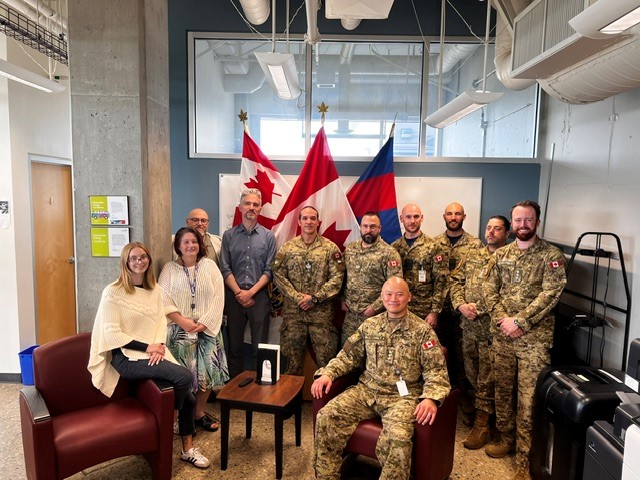
On 23 Sep 26, Real Property Operations Unit (West) (RPOU(W)) hosted a professional development (PD) session on Truth and Reconciliation for the Headquarters (HQ), Defence Construction Canada (DCC), and RPOU(W) detachments across Western Canada and 1 Canadian Division Engineer Sergeant Major. The session provided an opportunity to better understand the historical policies that affected Indigenous Peoples in Canada and to reflect on our collective responsibility in advancing reconciliation.
The presentation examined several measures historically used by the Canadian government to assimilate Indigenous Peoples into mainstream society. Participants learned about the forced relocation of Indigenous communities onto reserves, restrictions on cultural and spiritual practices, and the implementation of the Residential School System. These policies disrupted traditional ways of life, weakened community structures, and contributed to lasting social, economic, and health challenges that continue to affect many Indigenous communities today.
The discussion explored how the Residential School System sought to suppress Indigenous languages, cultures, traditions, beliefs, and family structures. For generations, Indigenous children were removed from their homes and separated from their families, resulting in profound trauma that has affected communities across multiple generations. Participants examined how these policies contributed to the loss of language, culture, and identity while creating long-lasting impacts that continue to be felt by Indigenous Peoples today.
The session also placed Canada's experience within a broader global context. Examples from Australia, New Zealand, Japan, and China demonstrated that attempts to assimilate Indigenous and minority populations have occurred in many parts of the world throughout history. While the circumstances differed between countries, the lesson remained consistent: the fact that a practice was once common does not make it right. Understanding these historical realities helps us recognize the importance of protecting cultural diversity, human rights, and the dignity of all peoples. Canada stands at a crossroads in its reconciliation journey. Meaningful change requires more than awareness. It requires education, understanding, empathy, and action. Reconciliation cannot occur without first understanding the truth and acknowledging the pain experienced by Indigenous communities. Only through that understanding can we work collectively to address the lasting effects of intergenerational trauma and help ensure that similar injustices never occur again.
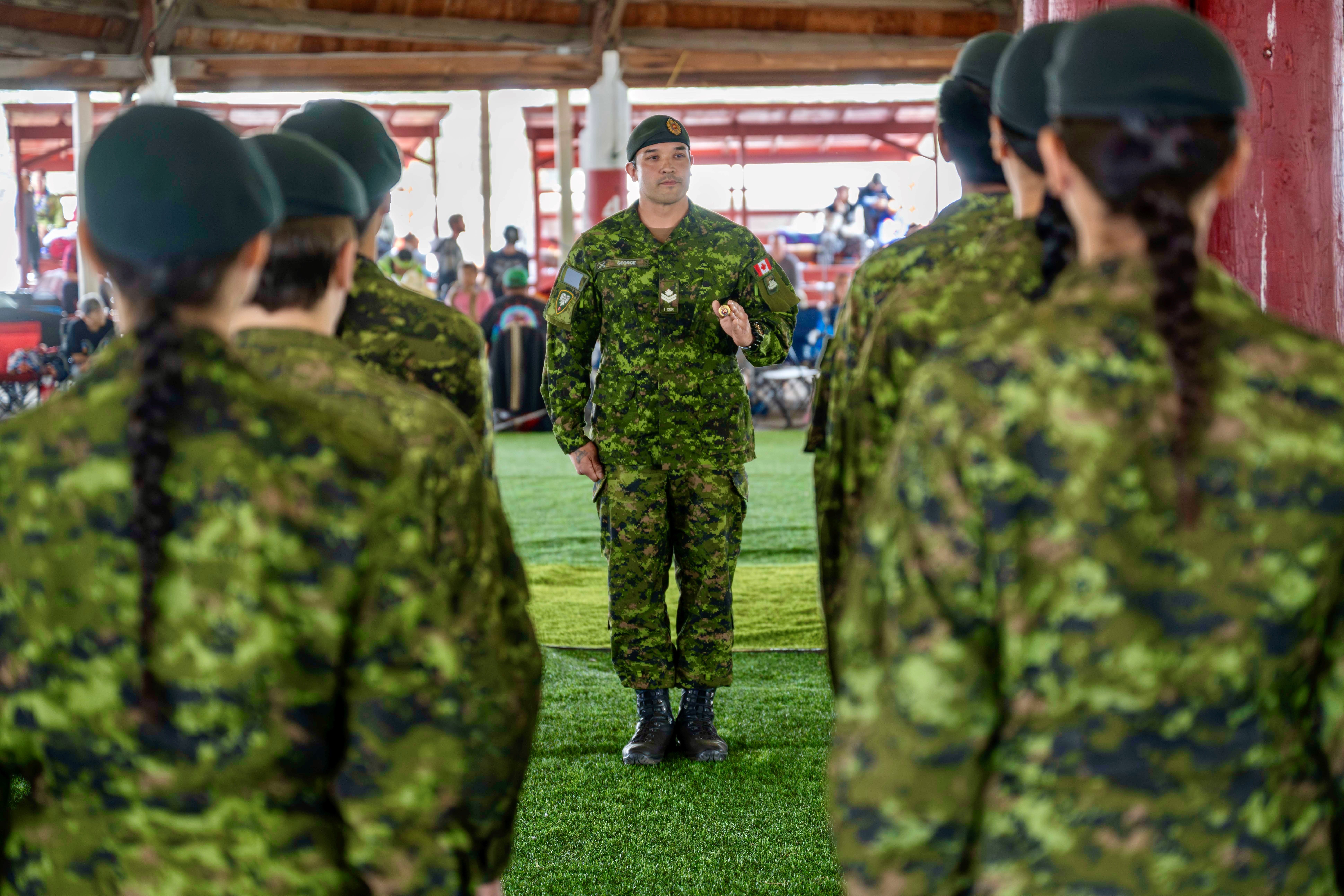
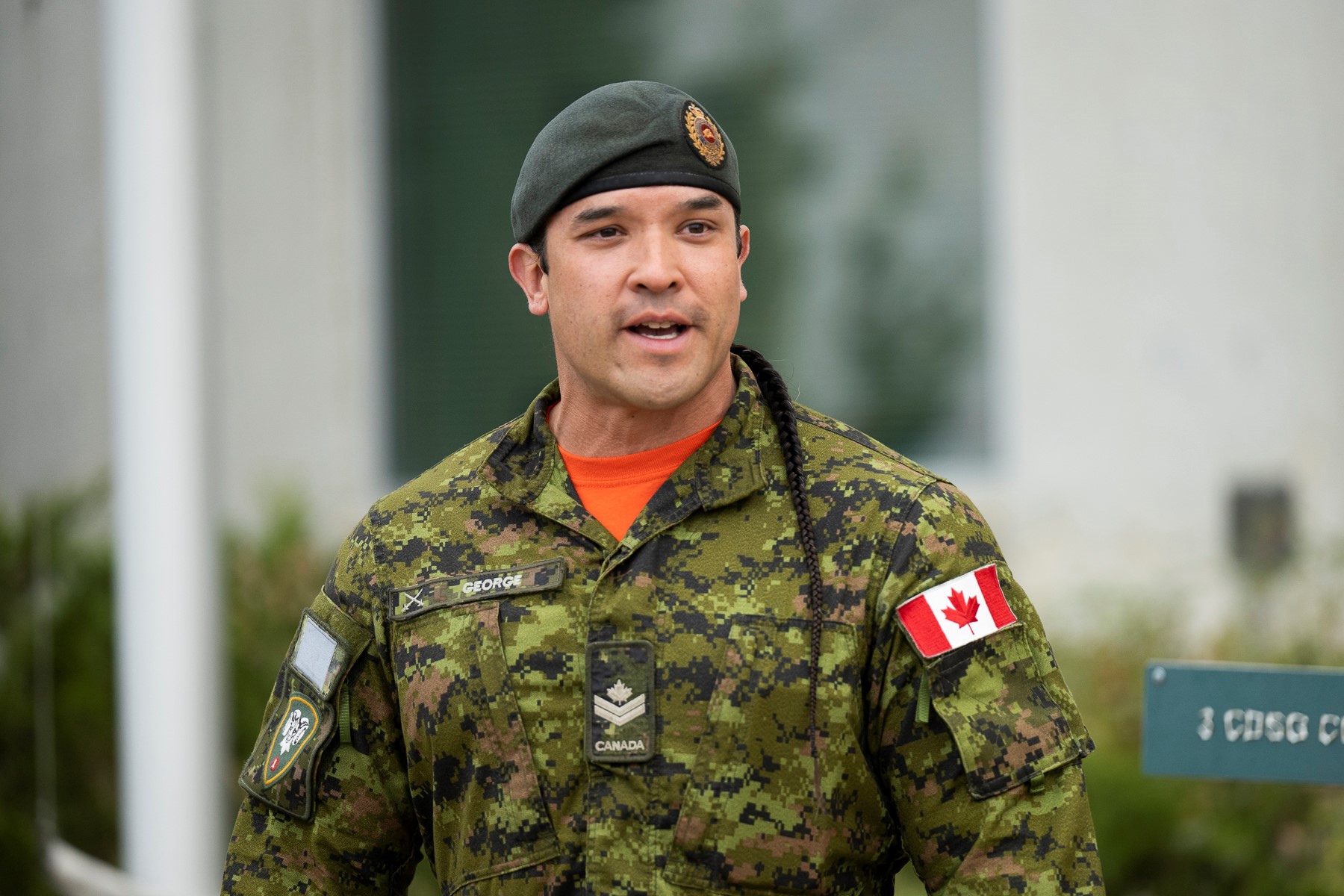
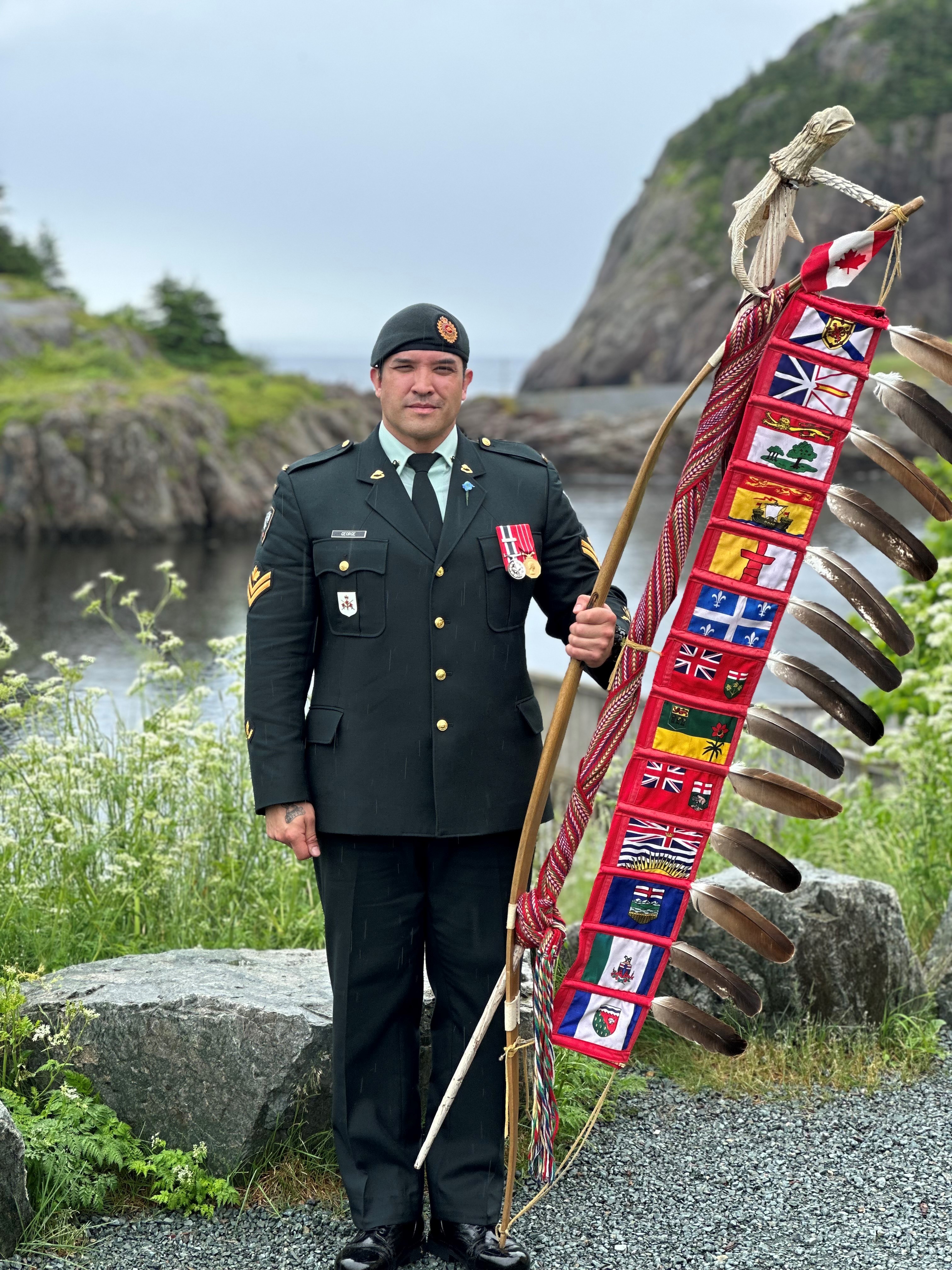
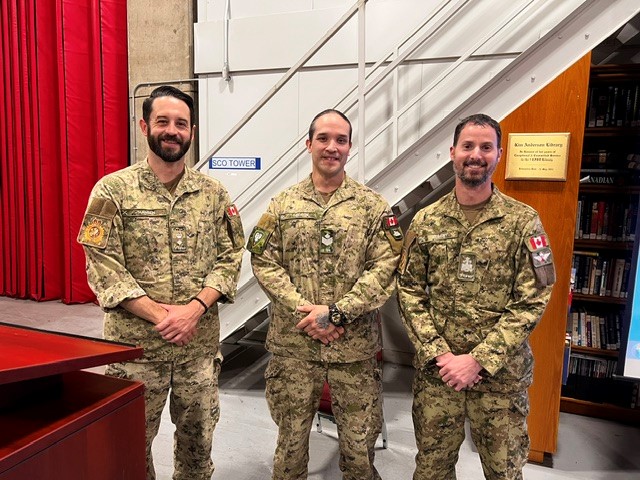
A powerful highlight of the session was the personal story shared by Sgt Justin George, the 1 Canadian Mechanized Brigade Group (1 CMBG) Indigenous Advisor. Through his family's experiences, he illustrated how the effects of residential and boarding school systems extended beyond those who attended them directly and impacted multiple generations of Indigenous families.
Sgt George spoke about his late father, who passed away after a courageous battle with ALS in 2025. Despite growing up in difficult circumstances and facing many personal challenges, his father chose a different path for his family. One of the most powerful lessons he shared with Justin was: "Be the parent that you needed when you were a child." This message of resilience, personal responsibility, and hope resonated strongly with the audience. It highlighted that while individuals cannot change the hardships of the past, they can choose to break cycles of trauma and build stronger futures for the next generation.
Sgt George also shared the challenges facing many Indigenous communities today, including the continuing reality that some communities still struggle with access to infrastructure, reliable services, and economic opportunities. Despite these challenges, his story demonstrated the strength, determination, and resilience that exist throughout Indigenous communities across Canada. Beginning his first job at the age of 12, Justin worked in numerous fields including carpentry, volunteer firefighting, oil and gas, tourism, and security before joining the Canadian Armed Forces in 2011. He completed the Indigenous Leadership Opportunity Year at the Royal Military College of Canada before continuing his service as a Non-Commissioned Member in the Combat Engineers.
Since being posted to 1 Combat Engineer Regiment in 2014, Sgt George has demonstrated exceptional leadership both within the CAF and throughout Indigenous community initiatives. He has served as an instructor on the Bold Eagle Program from 2021-2024, mentored Indigenous youth, supported Eagle Staff Carrier and Sentinel training, and worked tirelessly to promote cultural awareness and understanding across the Defence Team. His operational service includes deployments on Operation UNIFIER, where he contributed to engineer training efforts supporting Ukraine. He has also played an important role in promoting cultural wellness, physical fitness, and professional development within the CAF. His dedication to service, leadership, and inclusion earned him recognition through the King Charles III Coronation Medal in 2023.
Perhaps most importantly, Sgt George continues to pass on the teachings he received from his father to his own son, Ares. Through daily conversations about culture, identity, and heritage, he demonstrates that reconciliation is not only about understanding the past but also about ensuring a stronger future for the next generation. “Becoming a father is the greatest privilege of my life. If one of my grandparents had not made it home, neither I nor my son would be here today.”
Through heartfelt reflection, Sgt George shared the profound impact that generational trauma has had on his family, illustrating how the experiences of previous generations continue to shape lives today.
The partnership between the Defence Indigenous Advisory Group (DIAG) and the Defence Team Canadian Asian Network (DTCAN) demonstrated the positive impact that grassroots cultural initiatives can have within the CAF. By sharing personal experiences and encouraging respectful dialogue, these efforts help create a more inclusive and understanding Defence Team while inspiring future generations. The recording of this session can be viewed on DWAN here: RPOU(W) Truth & Reconciliation PD 2026
Truth and Reconciliation is not solely an Indigenous issue. It is a Canadian issue. Learning the truth is the first step toward reconciliation. Through education, empathy, and meaningful action, we can contribute to a future where all Canadians feel respected, valued, and included.
Thanks to Sgt Justin George for sharing his story and honouring his family’s experiences. His courage, resilience, and dedication serve as a powerful example of leadership and service to Canada as a father, a son, a Sapper, a modern day black sheep warrior, a proud member of the Penticton Indian Band, and an Okanagan Nation Warrior from British Columbia.
CHIMO!